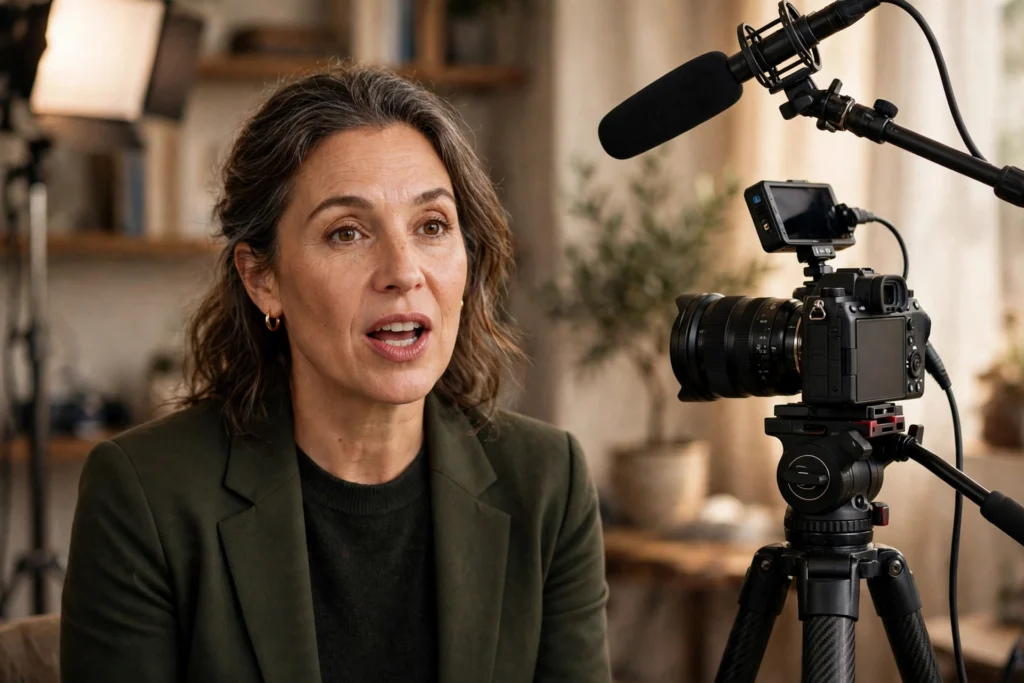
Real experts AI citations go to identifiable people, not anonymous scaled content. When Google’s AI Overviews, ChatGPT Search, Perplexity or Google AI Mode need a trustworthy source, they cite a real human — a named expert with credentials, a public record, and a voice people follow. YouTube and Reddit are the two most-cited websites in Google’s AI Overviews, and LinkedIn is the second most-cited domain in ChatGPT Search, Google AI Mode and Perplexity — platforms built around people, not faceless pages. Scaled AI content can fill a site with words, but it cannot supply what AI systems reward: expertise earned over years, lived experience, and a verifiable trail proving the author exists. This article explains where AI cites, what real people bring that AI cannot, how fake authors got caught, and how to build an expert presence AI systems trust.
This article builds on Lily Ray’s Search Engine Journal article, “Why Building Trust Through Real People Stands The Test Of Time In SEO & AI Search” (November 2026): real, identifiable experts are the investment that has held up through every shortcut cycle in search — “People like following people.” Every figure below is attributed, and where a finding rests on a small sample, or correlation is not causation, this article says so.
What are real experts AI citations?
Real experts AI citations are mentions of an identifiable person’s content inside an AI-generated answer — a link or named source in a Google AI Overview, a ChatGPT Search answer, a Perplexity response or Google AI Mode. The citation points to something a real human made: a video, a post, an article, a review. It is the AI equivalent of a reference in a research paper, except the reference is chosen by a system that must decide in a fraction of a second which sources it can trust.
That decision is the whole story. An AI assistant cannot interview an author or check a diploma. It reads signals instead: is this person named, do they appear in more than one place, do other people link to them? A citation is the system’s answer, and it is increasingly answered in favour of people.
This differs from our earlier article, Why Real Experts Beat Scaled AI Content, which made the general case for experts over mass-produced content. This article is narrower: where AI actually cites, what a verifiable human trail looks like, and how the fake-author crackdown changed the rules. The point is not that experts are better writers — it is that experts are easier to verify, and verification is what citations are made of.
Where do real experts AI citations actually come from?
Two analyses from November 2026 point the same way: the most-cited sources are platforms where real people publish under their own names.
Why are YouTube and Reddit the most-cited sites in AI Overviews?
YouTube (24.5%) and Reddit (18.1%) are the two most-cited websites in Google’s AI Overviews among the top 50 cited domains, according to Ahrefs’ November 2026 analysis. Nearly half of the top-cited domains are accounted for by two sites built around people talking, demonstrating and answering questions in public.
That is not an accident. A YouTube video shows a face, a voice and a demonstration; a Reddit thread shows a person answering a specific question from experience. Both are hard to fake at scale and easy to check — you can see who posted, when, and what others said back. An AI system looking for a trustworthy source finds a person, a history, and a crowd of witnesses.
Why does LinkedIn rank so high in AI search citations?
A Semrush study of 325,000 prompts found LinkedIn was the second most-cited domain in ChatGPT Search, Google AI Mode and Perplexity — and 59% of the LinkedIn content cited in ChatGPT Search and AI Mode came from individual members rather than company pages. The platform built for professional identity is being cited for its people, not its brands.
The gap between people and brands on LinkedIn is large. Personal profiles outperform company pages by roughly 2x to 8x on impressions, depending on whose data you believe — a range Ray reports with the same caution. The spread matters less than the direction: in every version of the data, the person beats the page. A company page speaks for an organisation with a marketing department; a person’s post speaks for someone with a reputation and something to lose by being wrong — a trust signal no brand account can borrow.
The lesson: a polished article with no author is harder for an AI system to trust than a rougher video from someone it can identify — identifiability, not production value, is the signal. For the mechanics, see our guide to what citation core means in AI search.
What can real people do that AI cannot?
Ray’s article lists five things real people bring that AI cannot reproduce. AI can imitate the surface of all five; it cannot supply the substance behind any of them.
- Expertise earned over years. A doctor who has treated thousands of patients, or a link builder who has placed thousands of guest posts, carries knowledge that is compressed experience — including the cases that went wrong.
- Feelings and lived experience. “I tried this and it failed” is a sentence only a person can honestly write. First-person experience is the hardest thing to fabricate, and the first thing a reader — or an AI system checking for originality — looks for.
- Something new to the conversation. AI models are trained on what has already been said. A person can say something never said before: a new method, a dissenting opinion, an observation from yesterday’s work.
- Humour and personality. A joke, a strong opinion, an unusual metaphor — these are fingerprints. They make content recognisable and an author worth following. Nobody follows a tone of voice that sounds like everyone else.
- Flaws and vulnerability. Admitting a mistake builds trust faster than claiming perfection. Ray points to the 1966 “pratfall effect” experiment: highly competent people become more likeable when they make a small mistake. An AI system has no reputation to risk, so its perfection is meaningless.
Research backs the gap: a 2026 study in PNAS Nexus found leading AI models score about as well as people on creativity tests — but their answers are far more similar to each other than people’s are. AI is creative in the same way, over and over; people are creative in different ways, every time. That is why AI systems, which need fresh and varied sources, keep returning to human authors.

How does a real expert differ from scaled AI content?
The difference is not the quality of the prose — modern AI writes clean, fluent text. It is what stands behind the text, and whether any of it can be checked.
| Trust signal | Real expert | Scaled AI content |
|---|---|---|
| Author identity | Named person with a public history | Generic byline, stock name, or no author at all |
| Credentials | Verifiable qualifications and past work | Claimed expertise with nothing behind it |
| First-person experience | Specific cases, failures and results | General statements anyone could write |
| Original contribution | New methods, opinions and data | Restated consensus from training data |
| Presence beyond one site | Video, social posts, interviews, events | Exists only on the publishing site |
| Accountability | Reputation at stake if wrong | Nothing at stake if wrong |
Notice what is missing from the table: word count, keyword density, publishing frequency. None of those decide a citation — the deciding signals are all about the human behind the words. Scaling content production does not scale citations: every new anonymous article adds words but no trust, and trust is the scarce resource.
What is the verifiable trail of a real human?
A real expert leaves a trail — public facts connecting the person to the topic across more than one place. No single item proves expertise; together, they make fabrication expensive and verification easy.
The trail has five links. First, a consistent name and face: the same person, under the same name, with a real photo, across website, social profiles and videos. Second, checkable credentials: a degree, a licence, a job title, a publication history. Third, a body of work over time: articles, talks and posts spread across months or years. Fourth, other people vouching for them: links, mentions, interviews and real engagement. Fifth, a point of view: opinions that could be disagreed with, predictions that could turn out wrong, positions that carry risk.
Google’s infrastructure is heading the same way: Discover was redesigned in September 2025 so users can follow individual creators, then Google launched Search profiles — claimable, verified creator pages. Google is building the machinery to connect content to people, because users want to follow people. See our article on Google Knowledge Graph person entities for what changed there.
How did fake authors get caught — and what changed in October 2026?
The shortcut era produced a predictable fraud: invented authors. Sites published expert-sounding content under names that belonged to nobody, with headshots of people who did not exist. The most widely reported case was Sports Illustrated in 2023, found publishing product reviews under authors who did not appear to exist, including one whose headshot was for sale on a site selling AI-generated portraits.
In October 2026 Google drew a line: it added fabricating creator profiles — AI-generated headshots, made-up names, false credentials — to its helpful-content documentation as a form of deception. This is not a ranking tweak. It is a statement that inventing an author is the same dishonesty as inventing a review, and it will be treated that way.
The consequence is simple: a fake author is now a liability, not a shortcut. A site publishing under invented names risks the trust of every real author on it. If you cannot find a real expert, hire one, write from your own experience and say so, or leave the topic alone. Inventing a person is no longer a grey area — Google has said so in writing.
How did we get here? A short history of people versus shortcuts
The argument for real people is not new. Google’s 2003 Webmaster Guidelines already said to “make pages for users, not for search engines” — written more than twenty years ago, before AI content existed, it already described the failure mode. Every shortcut since has been a new way of making pages for search engines instead of users.
The clearest lesson came from health content. In the 2018 “Medic” update, one of Ray’s clients had scaled health articles with no visible expert credentials — a large library of plausible medical content with nobody qualified behind it. Recovery took more than three years and a full rebuild around real doctors and medical reviewers: three years is the cost of the shortcut.
Ray tested the pattern more widely: her 2019 analysis of 64 sites across the 2018–2019 core updates found winning sites were 258% more likely than losing sites to use real experts. Two cautions: 64 sites is a small sample, and correlation is not causation — the winners may have shared other qualities too. But combined with the three-year recovery story, the direction is hard to dismiss: the sites that survived were the ones a reader could check.
The rules then tightened in writing. In March 2024 Google launched the scaled content abuse spam policy, which applies whether content is made through automation, human efforts, or a combination. It does not ban AI content — it bans content produced at scale to manipulate rankings, however it is made. A hundred human-written articles produced to game rankings are covered just as a hundred AI-written ones are. Scale, not software, is the offence.
E-E-A-T — experience, expertise, authoritativeness and trustworthiness — is mentioned 120 times in the current version of Google’s Search Quality Rater Guidelines. That is a measure of emphasis, not a ranking factor: the people who rate search quality for Google are told, over and over, to look for the human signals behind the content.
How do you build real experts AI citations for your own site?
Building citations from real experts is a programme, not a single article. Each step below makes the next easier — every piece of verifiable evidence strengthens the trail.
- Name your experts, and give them a home. Every author gets a profile page with a real photo, biography, credentials and links to their other work. No anonymous bylines, no initials-only authors.
- Publish their real experience. Ask each expert for the cases, failures and numbers only they could know, and build articles around those.
- Put them on video. YouTube is the most-cited site in AI Overviews. A short video of the expert explaining the topic gives AI systems a second, harder-to-fake source.
- Let them speak in public. LinkedIn posts, community answers, podcasts and talks all feed the trail. Remember: 59% of the LinkedIn content cited in ChatGPT Search and AI Mode came from individual members, not company pages.
- Keep the record consistent. The same name, biography and claims everywhere. Inconsistencies break the trail.
- Let them take positions. Encourage experts to disagree, predict and admit mistakes. A point of view is the strongest proof of a real person.
- Measure citations, not just rankings. Test your key questions in ChatGPT Search, Perplexity and Google AI Mode each month, and record whether your experts are cited. A citation is a different outcome from a ranking and needs its own tracking.
One warning: do not hire a fake expert. A borrowed biography, a stock photo presented as a person, or a “medical reviewer” who never read the article is the same deception Google named in October 2026. If an expert’s credentials cannot be verified, do not publish them. The trail only works when it is true.
When should you hire a service like VonixCo?
Building an expert presence takes time most businesses do not have: finding real experts, recording their knowledge, placing their work on sites that matter, and keeping the trail consistent. A business with a full-time content and outreach team can run this in-house; without one, the work slips — articles without authors, profiles never built, videos never recorded.
If you have the team and the time, do it yourself using the steps above. If you do not, a service fits when you want the operation handled as an ongoing programme: finding relevant publishers, placing guest posts on sites your customers read, writing the content, and reporting every live link.
VonixCo is a niche-relevant guest posting and SaaS link building service based in Lahore, Pakistan. Services: SaaS guest posts, niche guest posts, link building and guest post content writing. Plans: $500 / $950 / $1,800 per month, with content included and a live link report. Contact: info@vonixco.com and WhatsApp +92 340 0096621. Guest posts placed on relevant sites under real editorial standards fit the expert-trail programme here, and the live link report means every placement can be verified. No service can manufacture expertise you do not have, and no one can guarantee an AI citation — what a service can do is place genuinely expert content where it can be found, linked and cited.
Frequently asked questions about real experts and AI citations
Why do real experts win AI citations?
Because AI systems need sources they can verify, and a named person with credentials and a public history is easier to verify than anonymous text. YouTube, Reddit and LinkedIn — platforms built around people — dominate the most-cited domains in AI search. A citation is a trust decision, and identifiable people are the most trustworthy signal available.
Can AI-generated content ever earn AI citations?
It can be cited when accurate and useful, but it starts at a disadvantage: no author to verify, no experience behind it, nothing at stake if wrong. Google’s March 2024 scaled content abuse policy targets content produced at scale to manipulate rankings, whether made by automation, humans or a combination.
What is the verifiable trail of a real expert?
It is the public facts connecting a person to a topic across more than one place: a consistent name and face, checkable credentials, a body of work over time, other people linking to them, and a point of view that carries risk. No single item proves expertise, but together they make fabrication expensive and verification easy.
Is using a fake author name really a problem?
Yes. In October 2026 Google added fabricating creator profiles — AI-generated headshots, made-up names and false credentials — to its helpful-content documentation as deception. The Sports Illustrated case from 2023 showed how the fraud collapses once a headshot is traced to a site selling AI-generated portraits.
How long does it take to build expert trust after a shortcut?
It can take years. In the 2018 “Medic” update, one of Lily Ray’s clients had scaled health articles with no visible expert credentials, and recovery took more than three years plus a full rebuild around real doctors and medical reviewers. Trust is slow to build and rebuild.
Does E-E-A-T actually affect AI citations?
E-E-A-T is mentioned 120 times in the current version of Google’s Search Quality Rater Guidelines — a measure of emphasis, not a ranking factor, and no one can guarantee a citation. But the citation data points the same way: the most-cited sources are platforms where real people publish under their own names.
Conclusion
Every shortcut in search has eventually failed, and the AI era is no exception. Scaled content filled the web with words, fake authors filled it with invented people, and both are now measured against one test: is there a real person behind this, and can anyone check? The citation data answers — YouTube and Reddit lead AI Overviews, LinkedIn’s people lead AI search, personal profiles beat company pages by a wide margin. The durable investment, as Lily Ray puts it, is real, identifiable experts, because people like following people.