

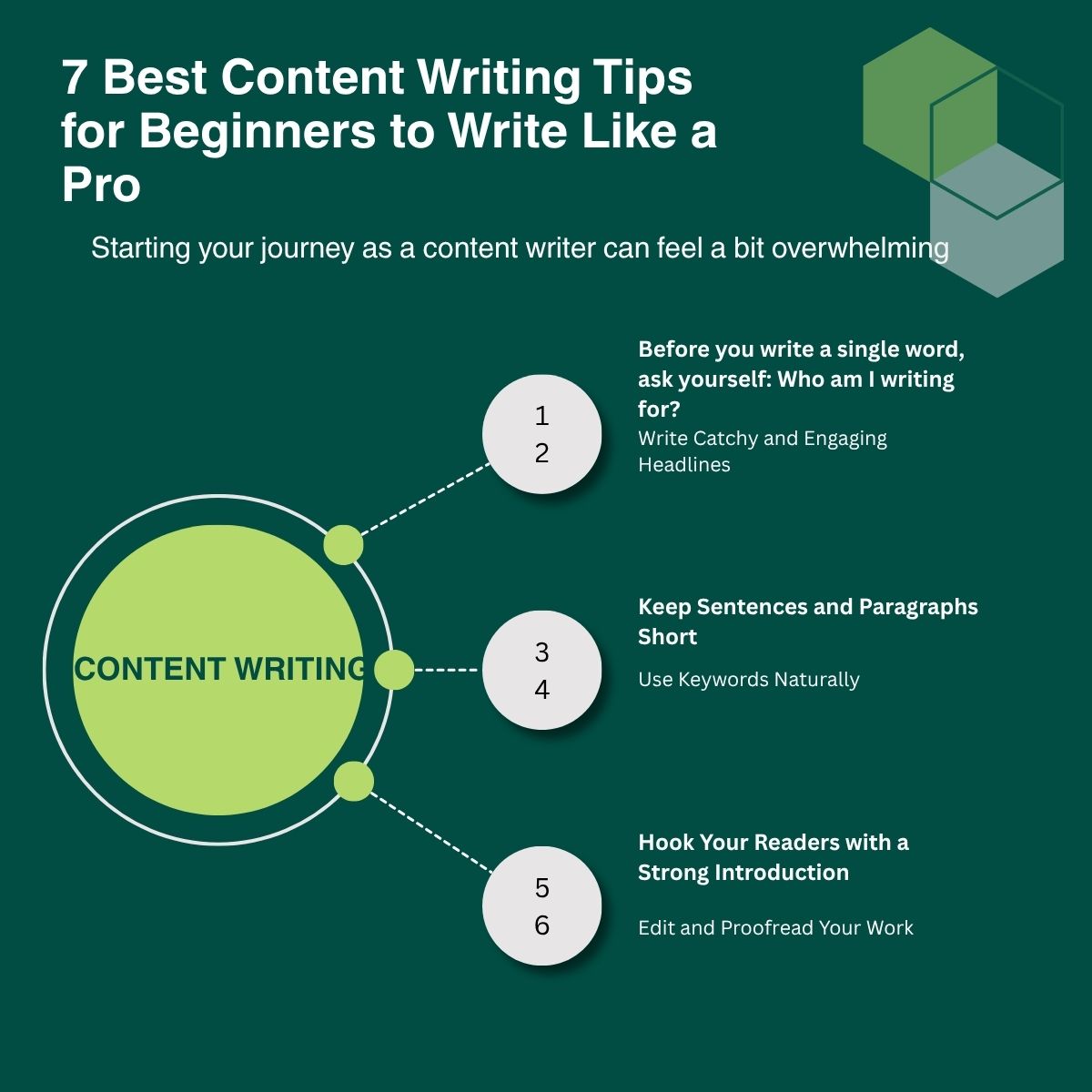
Starting your journey as a content writer can feel a bit overwhelming. From finding the right words to understanding what readers want, there is a lot to take in. However, with the right approach and a few practical strategies, you can quickly improve your skills and start writing like a professional.
Whether you are building a blog, writing for clients, or setting up a freelance portfolio, here are the 7 best content writing tips for beginners to help you shine.
1. Know Your Target Audience
Before you write a single word, ask yourself: Who am I writing for?
- Understanding your audience’s age, interests, problems, and preferences helps you choose the right tone.
- If you are writing a guide for students, keep the language encouraging and simple. If you are writing for business professionals, keep it formal and direct.
2. Write Catchy and Engaging Headlines
Your headline is the first thing people see, and it determines whether they will click or scroll past.
- Use strong words, numbers, and clear promises in your titles.
- For example, a title like “7 Best Content Writing Tips for Beginners” instantly tells the reader what value they will get.
3. Keep Sentences and Paragraphs Short
Online readers have a short attention span. Big blocks of text can look boring and difficult to read.
- Keep your paragraphs to 2 to 3 sentences maximum.
- Use bullet points and subheadings to break up the text, making it scannable and easy to digest.
4. Use Keywords Naturally
To make your content visible on search engines like Google, you need to use SEO keywords (such as content writing tips for beginners or seo content writing tips).
- Never force or stuff keywords where they don’t belong, as it ruins the reading experience.
- Instead, place them naturally in your introduction, headings, and conclusion.
5. Hook Your Readers with a Strong Introduction
The first few lines of your article are crucial. If your introduction is dull, the reader will leave your page.
- Start with an interesting question, a relatable problem, or a surprising fact that immediately grabs the reader’s attention and makes them want to read more
6. Edit and Proofread Your Work
Writing is only half the job; editing is where the magic happens. Once you finish a draft, take a short break before reading it again.
- Look for spelling mistakes, grammatical errors, and awkward sentence structures.
- Reading your draft out loud is one of the best ways to catch flow issues and make your writing sound natural.
7. Write Consistently to Build Your Voice
Like any other skill, content writing improves with practice. The more you write, the easier it becomes to find your unique writing voice and style. Set a regular schedule—even if it’s just writing a few paragraphs a day—and watch how quickly your confidence grows.