

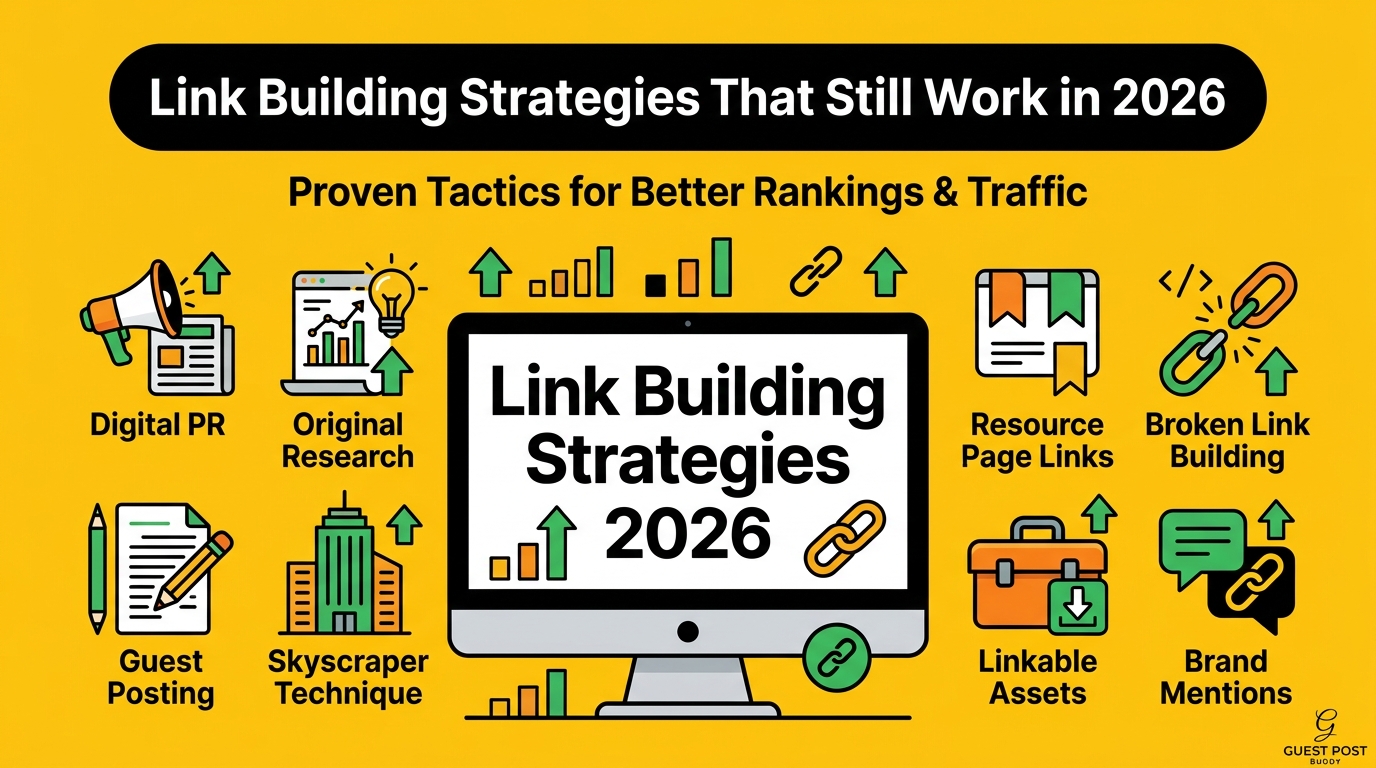
Link building remains one of the most powerful ways to boost your website’s visibility, authority, and traffic in 2026. While Google’s algorithms have grown smarter—with a stronger focus on helpful content, E-E-A-T (Experience, Expertise, Authoritativeness, and Trustworthiness), and user experience—quality backlinks continue to play a key role in rankings.
If you’ve been worried that link building is dead or too risky, don’t be. The tactics have evolved, but the fundamentals haven’t. Spammy, low-quality methods get ignored or penalized, while smart, value-driven strategies deliver sustainable results. As an SEO writer who’s worked with businesses on both sides of the Atlantic, I’ve seen what actually moves the needle today.
In this comprehensive guide, we’ll explore proven link building strategies that work in 2026. You’ll get practical, step-by-step advice in plain English, real-world examples, and tips to avoid common pitfalls. Whether you’re a beginner, small business owner, or seasoned marketer, this article will help you build links ethically and effectively.
Why Link Building Still Matters in 2026
Search engines like Google still view backlinks as “votes of confidence” from other sites. A relevant, high-quality link from a trusted website tells Google your content is valuable and worth ranking.
However, the game has changed:
– **Quality over quantity** is non-negotiable. One strong link from a relevant industry site often outperforms dozens of weak ones.
– **Relevance and context** matter more than ever. Links embedded naturally in helpful content carry more weight.
– **E-E-A-T signals** are crucial. Links from sites that demonstrate real expertise boost your own authority.
– **AI and search overviews** increasingly factor in brand mentions and trusted citations.
Statistics from 2026 show that digital PR tops the list of effective tactics for many professionals, followed by original research and resource page outreach. Cold outreach response rates hover around 8-10% when done well, emphasizing the need for personalization and value.
The bottom line: Link building isn’t about manipulation anymore. It’s about creating genuinely useful content and building real relationships.
Core Principles for Successful Link Building in 2026
Before diving into specific tactics, keep these principles in mind:
1. **Focus on Relevance** — Links from sites in your niche or related fields perform best.
2. **Prioritize Authority and Trust** — Aim for sites with strong domain ratings (DR 50+) and real traffic.
3. **Create Value First** — People link to content that helps their audience—solve problems, provide unique data, or offer tools.
4. **Diversify Your Profile** — Mix anchor texts, link types (dofollow/nofollow), and sources.
5. **Be Patient and Ethical** — Sustainable results come from white-hat methods. Avoid black-hat shortcuts like buying links or using PBNs.
Now, let’s explore the strategies that deliver results.
### 1. Digital PR: Earn Editorial Links Through Newsworthy Stories
Digital PR has become one of the most effective link building strategies in 2026. Instead of begging for links, you create newsworthy content that journalists and publishers naturally want to reference.
**How it works:**
– Develop original research, surveys, industry reports, or compelling stories.
– Pitch them to journalists via email, HARO (Help a Reporter Out) platforms, or journalist databases.
– Secure mentions and links in reputable publications.
**Step-by-step:**
– Identify a gap in your industry (e.g., “State of Remote Work 2026”).
– Gather fresh data through surveys, tools like Google Forms, or analytics.
– Create a press release or data-driven landing page with visuals.
– Reach out to relevant journalists with a personalized, benefit-focused pitch.
**Real example:**
A SaaS company ran a survey on AI tool adoption and landed features in Forbes and TechCrunch, gaining dozens of high-authority links.
**Tips for success:**
– Make it timely and data-backed.
– Build relationships with journalists on platforms like X (Twitter) or LinkedIn.
– Expect 5-15% response rates—volume and quality matter.
Digital PR delivers some of the highest ROI because the links are editorial and natural.
### 2. Original Research and Data-Driven Content
Creating proprietary data is a powerhouse strategy. Original research gets shared and linked because it provides fresh insights others can cite.
**Why it works in 2026:**
– Search engines reward expertise and freshness.
– Other bloggers and media outlets reference your data for years.
**How to create it:**
– Run your own surveys or analyze public datasets.
– Turn findings into reports, infographics, or interactive tools.
– Promote via outreach, social media, and email lists.
**Example:** An e-commerce site published “2026 Online Shopping Trends” with exclusive stats. It earned links from retail blogs and news sites organically.
**Pro tip:** Update old research annually to keep it earning links.
### 3. Resource Page Link Building
Many websites maintain “resource,” “tools,” or “further reading” pages. These are goldmines for relevant links.
**Step-by-step process:**
– Use search operators like `intitle:”resources” OR intitle:”useful links” + your keyword`.
– Check if your content fits.
– Reach out politely: “I noticed your excellent resource page. My guide on [topic] might be a helpful addition for your readers.”
**Best practices:**
– Only pitch genuinely relevant content.
– Personalize every email—reference something specific on their page.
– Offer value, not just a request.
This method remains highly repeatable and effective with good personalization.
### 4. Broken Link Building (The Updated Version)
Broken link building involves finding dead links on relevant pages and suggesting your content as a replacement.
**Modern approach:**
– Use tools like Ahrefs, SEMrush, or free checkers to find broken links.
– Create superior replacement content.
– Contact the site owner with a helpful, non-salesy message.
**Example template:**
“Hi [Name], I was reading your great article on [topic] and noticed the link to [old resource] is no longer working. I’ve created an updated guide that covers [benefits]. Feel free to use it if helpful.”
Success rates improve when you offer real value and keep outreach friendly.
### 5. HARO and Journalist Outreach
HARO (now part of Connectively or similar platforms) connects experts with journalists. Responding as a credible source can land you mentions in major publications.
**Tips:**
– Set up alerts for relevant queries.
– Respond quickly with concise, expert answers.
– Include a short bio and link to your site where appropriate.
– Build long-term relationships with journalists.
Alternatives include Twitter/X journalist requests and niche forums.
### 6. High-Quality Guest Posting
Guest posting isn’t dead—it’s just stricter. Focus on authoritative sites with real audiences and editorial standards.
**Guidelines for 2026:**
– Target sites in your niche with DR 40+ and genuine traffic.
– Write in-depth, original articles (1500+ words).
– Avoid over-optimized anchor text.
– Aim for natural placement within helpful content.
**Audience-first approach:** Write for the readers first, not just the link. This builds trust and drives traffic.
### 7. The Skyscraper Technique (Refreshed)
Find top-ranking content, create something better (more comprehensive, updated, visual), and reach out to people who linked to the original.
**Steps:**
1. Search for popular content in your niche.
2. Analyze why it ranks and improve upon it (add data, visuals, tools).
3. Reach out to linkers: “I saw you linked to [original]. Here’s an updated version with 2026 data.”
### 8. Creating Linkable Assets
Develop free tools, calculators, templates, infographics, or ultimate guides that people naturally want to link to.
Examples:
– Industry calculators
– Downloadable checklists
– Interactive maps or quizzes
Promote them on social media, forums, and through outreach.
### 9. Reclaiming Unlinked Brand Mentions
Search for mentions of your brand or name that don’t link back. Politely ask for the link.
Tools like Google Alerts, BrandMentions, or Ahrefs make this easy. This is often a quick win with high conversion.
### 10. Niche Edits and Contextual Link Insertions
Reach out to site owners to add your link naturally into existing relevant content. Do this sparingly and ethically on sites open to updates.
Focus on genuine value-add rather than paid placements.
### 11. Local Link Building (For Location-Based Businesses)
Sponsor local events, partner with charities, get listed in chambers of commerce, or contribute to local news. These links build community trust and relevance.
### 12. Relationship-Based and Community Link Building
Engage genuinely in industry forums, Reddit, LinkedIn groups, or conferences. Helpful contributions lead to natural links over time.
### Tools to Help You Succeed
– **Ahrefs or SEMrush**: Competitor analysis, link opportunities.
– **Hunter.io or RocketReach**: Finding emails.
– **BuzzSumo**: Content research.
– **Google Alerts**: Monitoring mentions.
– **HARO/Connectively**: Journalist opportunities.
Start with free versions where possible.
### Common Mistakes to Avoid in 2026
– Over-optimized anchor text.
– Low-quality directories or mass outreach.
– Ignoring mobile experience and site speed (Google considers the full picture).
– Focusing only on links without great content.
– Expecting overnight results—link building is a long game.
### Measuring Success
Track:
– New backlinks (via Google Search Console, Ahrefs).
– Organic traffic and rankings.
– Referral traffic.
– Domain authority growth.
– Brand mentions.
Set realistic goals, like 5-10 quality links per month for smaller sites.
### Building a Sustainable Link Building Campaign
Month 1: Audit your site, analyze competitors, create linkable assets.
Months 2-3: Outreach and promotion.
Ongoing: Maintain relationships, update content, monitor results.
Combine multiple strategies for best results. For example, use digital PR to amplify original research.
### Final Thoughts: Link Building Done Right in 2026
Effective link building today is about being helpful, authoritative, and genuine. Create content worth linking to, reach out with respect, and focus on long-term relationships rather than quick wins.
The strategies in this guide—digital PR, original research, resource outreach, broken links, and more—have proven effective based on current SEO practices. Implement them consistently, and you’ll see improved rankings, traffic, and brand authority.
Start small. Pick one or two tactics that fit your resources. Track what works for your niche and refine your approach. SEO is a marathon, not a sprint, but the rewards of smart link building are worth the effort.
If you put in the work to provide real value, the links—and the success—will follow.